
Working Group 3
Sustainable use of oceans and marginal seas
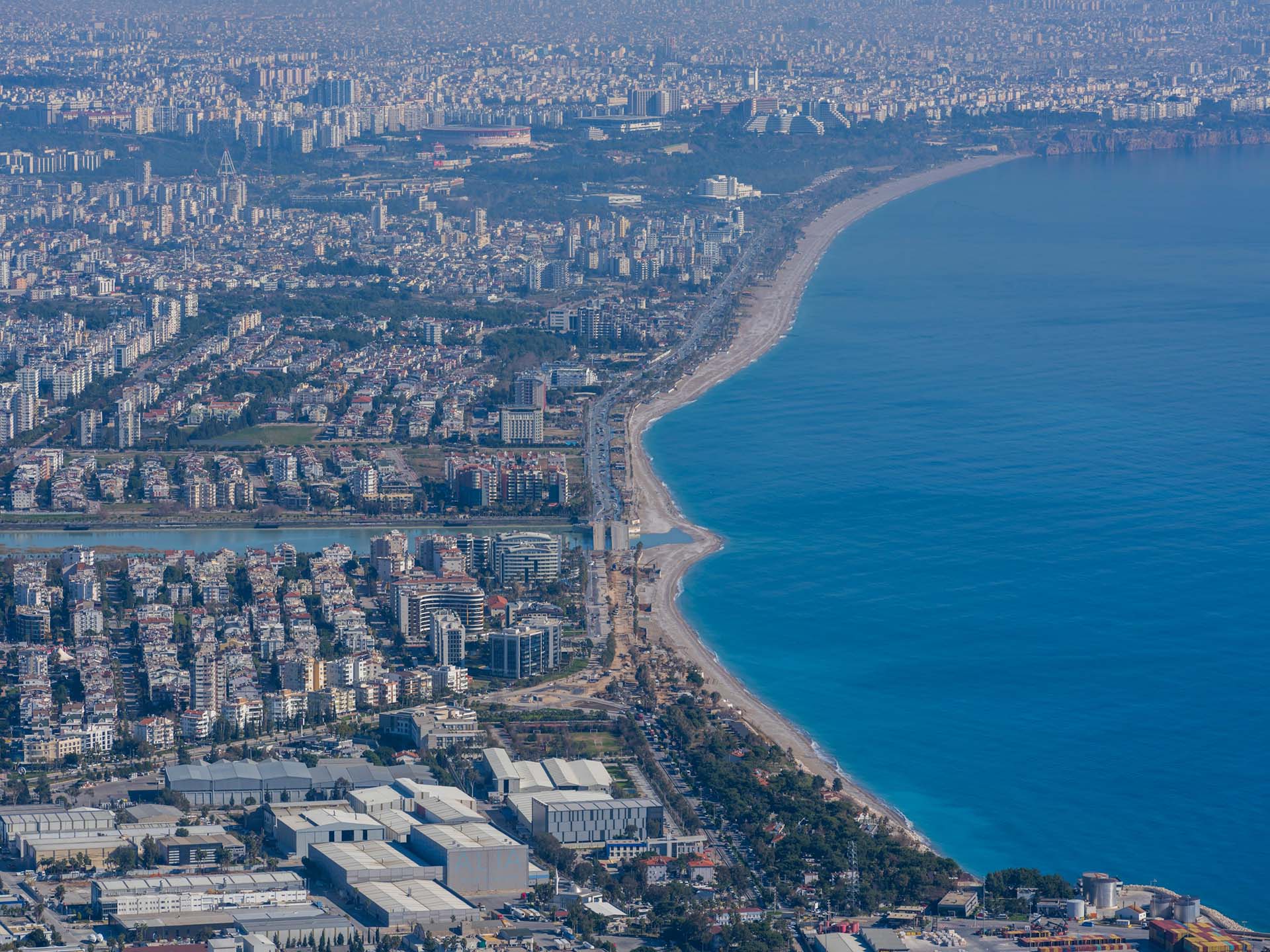
Oceans and marginal seas are a central component of the climate system and we rely on them for food and other resources. To balance human needs with marine ecosystem health for the long term, a coordinated and sustainable use of marine regions and their resources is essential. For many coastal oceans and marginal seas, for example, shallow depths and limited space constrain the area that is available for anthropogenic use. Especially in these regions, conflicts of interest arise from the rising demand of multiple socio-economic players such as offshore wind, nature conservation, shipping, coastal protection, fishing, military, tourism and many more. The intensive use exerts great anthropogenic pressures. These pressures, as well as the challenges associated with such conflicts of interests, can only be met and moderated through intensive research. Land-to-sea research approaches with high social relevance are very attractive for funding on a larger scale and fit well into the framework of the InTRES platform for Integrative and Transformative Research on Earth and Societies. The research challenges outlined below are all interdisciplinary in nature and, therefore, will take advantage of interaction between all InTRES working groups.
One current challenge deals with the state of the Baltic seafloor in the Anthropocene. The seafloor is veiled from our eyes, and we rely on geophysical and underwater visual studies to resolve its integrity and to trace anthropogenic impacts. We will make the traces of seafloor modulating processes such as bottom trawling, ship anchoring, wake erosion, seabed constructions and material dumping visible to a broader audience and derive the magnitudes and rates of disturbance. The information should be summarized in review paper.
A further research challenge is to capture and quantify anthropogenic disturbance in a holistic manner. Many of the anthropogenic pressures at work affect the entire vertical sea, from the ocean-atmosphere boundary down to the seafloor and below. Here, complementary marine datasets are needed. Propeller wakes generated by commercial ships for example, erode sedimentary strata, mix oxygen, nutrients, greenhouse gases and other elements within previously stratified waters, alter turbidity and light availability at depth, and mobilize large amounts of sands. We aim to combine expertise from different institutes and InTRES WG to evaluate the full spectrum of consequences of different anthropogenic pressures (e.g. trawling, commercial shipping, constructions). This can be realized through joint cruise-proposals or workshops.
Contact
- Dr. Jacob Geersen
- Dr. Heiko Stuckas