Underestimated wake: Shipping traffic causes more turmoil in the Baltic Sea than expected
Commercial shipping not only affects the Baltic Sea on the surface, but also has a significant impact on the water column and the seabed.
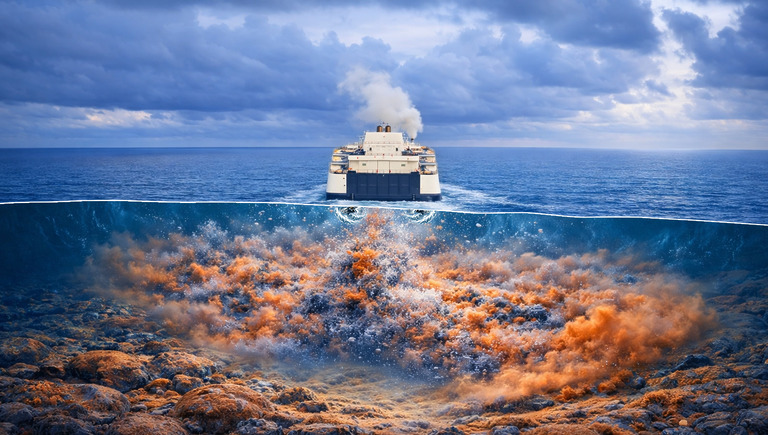
Commercial shipping not only affects the Baltic Sea on the surface, but also has a significant impact on the water column and the seabed.
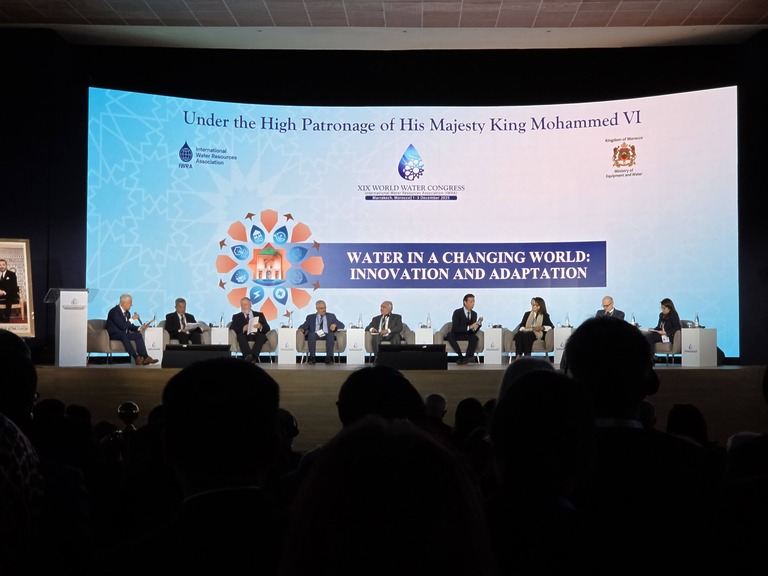
The Leibniz Research Network ‘Earth & Societies’ successfully contributed to the XIX World Water Congress in Marrakech organised by the International Water Resources Association through the working group ‘Freshwater & Societies’. The scientific coordinator and working group co-chair, Raghid Shehayeb, presented on the Integrative and Transformative Research on Water and Societies, exploring the research gaps […]
A new open-source approach enhances the reusability of scientific results by producing them human- and machine-readable. Learn more about the approach developed by researchers from the TIB—Leibniz Information Centre for Science and Technology, a member of the Earth & Societies Leibniz Research Network. With millions of scientific articles published annually, the need for machine-assisted information […]
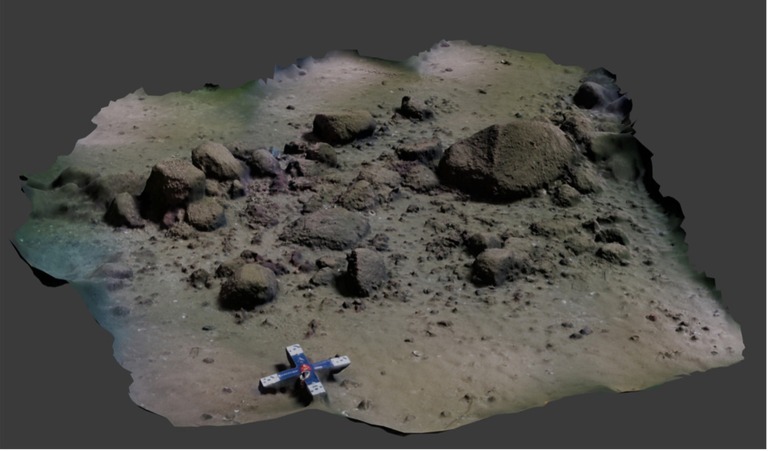
3D model of a section of the Ice Age stone wall at the bottom of the Baltic Sea off Rerik, which is the starting point for the SEASCAPE joint project that has now been launched (based on photos by P. Hoy, University of Rostock, and model calculations by J. Auer, LAKD M-V). Further mega-structures are […]
This year, the General Assembly of the European Geosciences Union (EGU) featured a session on "Atmospheric impacts of rocket launches and artificial object re-entries: knowns, unknowns, and research priorities" for the first time. It became clear how quickly the state of knowledge is expanding, for example in measuring and researching previously unknown processes of metals […]
Researchers from GESIS – Leibniz Institute for the Social Sciences and members of the Leibniz Research Network "Earth & Societies" have successfully applied for the NFDI4Earth 3rd Cohort of Pilots. The project “EarthLinks” bridges the gap between Earth Observation Data and social science research by creating an open-source, user-friendly tool for integrating time- and space-sensitive datasets. […]
Deutschlandfunk presented the results on the impact of nitrogen oxides from incinerating space debris on the middle and upper atmosphere of the research network together with a complementary study on aluminum from space debris by the University of Southern California. Space debris is a major issue for space safety. In this context, there is a […]
A paywalled article on SPIEGEL ONLINE reports on the effects of rockets and satellites on the Earth's middle and upper atmosphere. Based on the explosion of a Starship spacecraft from SpaceX, the consequences of the increasing number of rocket launches and deorbiting satellites are also outlined by Claudia Stolle, the director of the IAP, who […]
Navigating the Anthropocene towards habitability: linking research on Earth system processes and societal dynamics, values and policies
The ongoing and rapid change of the Earth system is attributable to pressures of human societies including the emission of greenhouse gases or the degradation of ecosystems.
The event highlights the critical role of innovations in driving transformations across the interconnected fields of biodiversity, climate, agriculture and food in a sense of ‘Systemic Sustainability’.
The topic Integrative and Transformative Research on Water and Societies is presented with its gaps and new demands during the session “Water for Sustainable Development” of the World Water Congress held in Marrakesh.
Workshop on biometeorology research in the Global South, hosted at the University of the Witwatersrand — addressing local challenges and research needs.

Session on systemic sustainability linking Earth and societal systems — exploring planetary boundaries, food systems, and transformative innovations.